Seasonal Sports Events and Their Effect on Limited-Time Incentives Within Sweden's Licensed Betting Ecosystem
Klara Peters · Oct 4, 2026
Seasonal Sports Events and Their Effect on Limited-Time Incentives Within Sweden's Licensed Betting Ecosystem
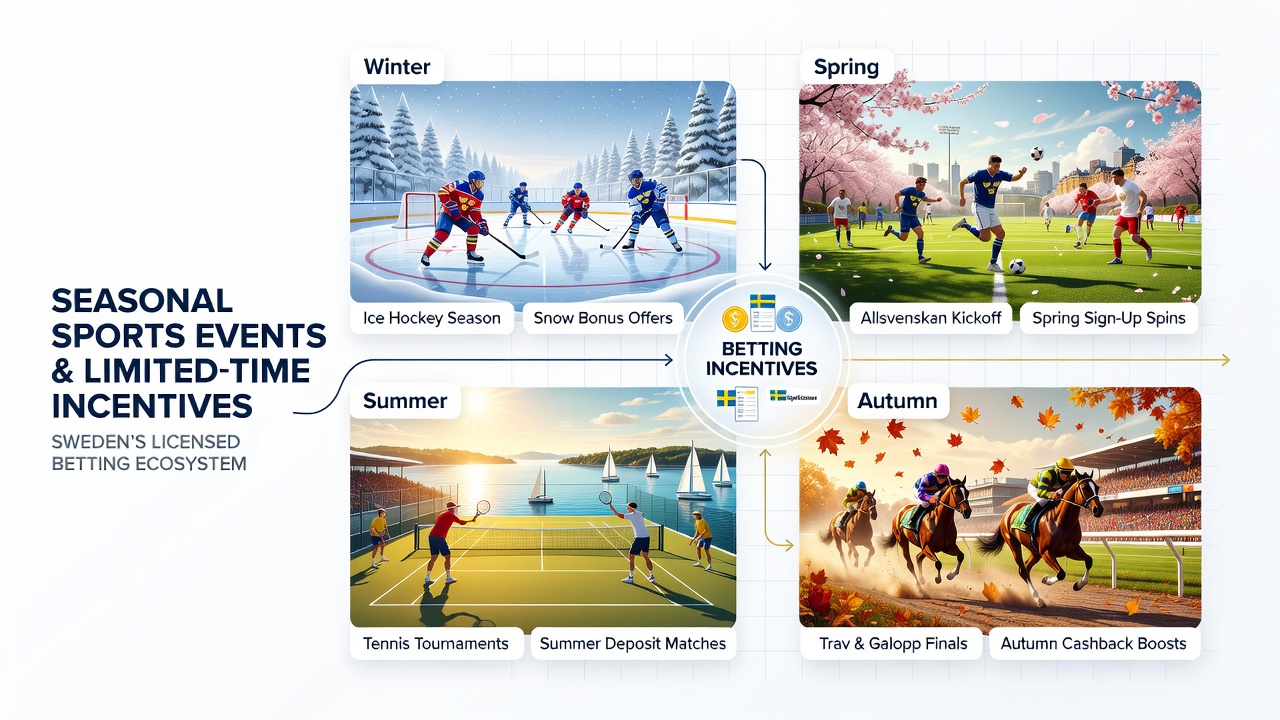
Sweden's licensed betting ecosystem operates under strict oversight from the Swedish Gambling Authority, and seasonal sports events create predictable shifts in how operators structure limited-time incentives across football, ice hockey, and other major competitions. These events drive specific promotional patterns because betting volumes fluctuate with league schedules, international tournaments, and domestic seasons that run from spring through late autumn.
Regulatory Framework Governing Promotions
Operators holding Swedish licenses must comply with rules that separate bonus structures from core betting products, and seasonal sports events often trigger time-bound offers that align with match calendars. Data from Spelinspektionen shows that activity peaks during Allsvenskan matches and SHL ice hockey games prompt operators to introduce deposit-based incentives and enhanced odds that expire within 24 to 72 hours of specific fixtures. These limited-time measures remain subject to the same transparency requirements that apply year-round, yet their frequency increases when spectator interest rises.
Major Seasonal Sports Driving Incentive Patterns
Football stands as the dominant influence because the Allsvenskan season stretches from March to November, creating a sustained period where operators release match-specific free bets and cashback offers tied to particular rounds. Ice hockey follows closely during winter months, and handball events add shorter bursts of activity around European championship windows. Observers note that international tournaments such as UEFA competitions generate cross-border interest that licensed Swedish platforms address through temporary incentive tiers unavailable outside those periods.
Effects on Limited-Time Incentive Design
During peak football weekends, platforms frequently adjust incentive parameters so that minimum deposit thresholds align with expected wager volumes, and expiration windows shorten to encourage immediate participation. Research indicates that these adjustments appear most consistently around derby matches and title-deciding games, where operators introduce layered rewards that combine bonus funds with risk-free bets. The same pattern holds for ice hockey playoffs, although the shorter duration of individual series leads to more compressed promotional cycles compared with league play.
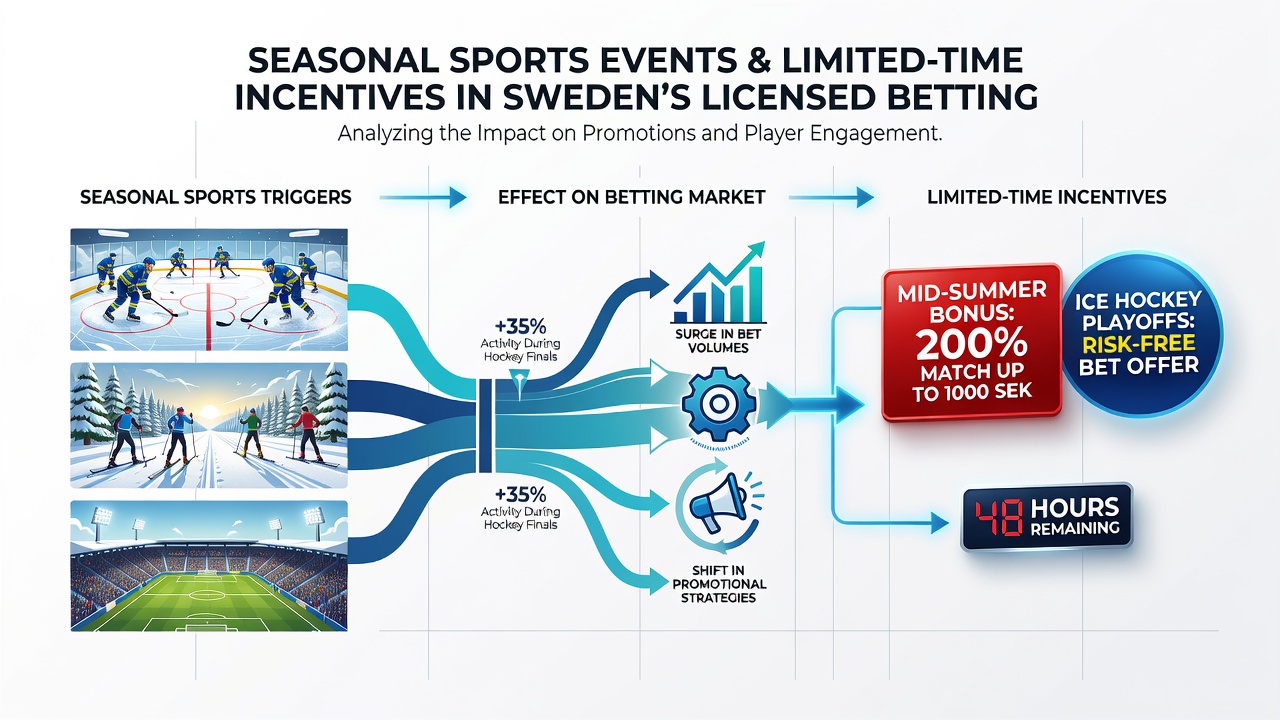
Operators track attendance and television ratings to calibrate offer intensity, and studies from Nordic gaming research groups confirm that incentive uptake rises sharply when events coincide with public holidays or extended weekends. Limited-time structures therefore function as responsive tools that operators deploy in reaction to fixture lists rather than as static features.
October 2026 Context and Upcoming Cycles
By October 2026 the Allsvenskan season will near its conclusion, and operators have already begun preparing incentive sequences that run through the final match rounds and into potential playoff scenarios. Historical figures reveal similar patterns in prior years, where late-season promotions include cumulative reward trackers that reset after the championship is decided. Winter sports events, including early ski and biathlon competitions, start to overlap with these football conclusions, creating a brief window where platforms manage two distinct incentive calendars simultaneously.
Data Trends Across Licensed Platforms
Statistics compiled by Swedish regulatory bodies demonstrate that the volume of time-limited incentives increases by measurable percentages during major event windows, while average incentive values remain within prescribed regulatory limits. European gaming association reports further illustrate that Swedish operators maintain consistent compliance rates even as seasonal demand fluctuates, because all promotional mechanics undergo pre-approval processes that do not vary by calendar period. Those who monitor player behavior across multiple seasons observe that engagement with limited-time offers concentrates around live events rather than spreading evenly throughout the year.
Conclusion
Seasonal sports events therefore shape the timing, duration, and structure of limited-time incentives inside Sweden's licensed betting ecosystem by providing predictable anchors around which operators align their offerings. Regulatory requirements ensure these adjustments stay transparent and bounded, while fixture calendars determine when the most concentrated activity occurs. The interplay between football, ice hockey, and other competitions produces a yearly rhythm that operators and regulators both track through ongoing data collection and compliance reviews.